When everything goes wrong, your plan cannot.
Turn Disaster Chaos into a Coordinated, Life-Saving Response
Thrive Disaster Response Network (TDRN) gives communities, agencies, and skilled volunteers a battle-tested system to bring structure to the first 24–72 hours—when decisions are hardest and lives are on the line.
Built with input from military, search & rescue, fire, aviation, and field-tested volunteer teams.
The Reality on the Ground
The First 24–72 Hours Are Pure Chaos
After a hurricane, wildfire, tornado, or flood, responders are overwhelmed. Roads are blocked. Communications are patchy. Agencies operate in silos. Skilled volunteers show up—but without direction.
Every hour without a clear system means delayed rescues, duplicated effort, and communities left in the dark about what is happening and what help is coming.
- Chaos on the radio: multiple agencies, no shared operating picture.
- Volunteers ready to help, but no clear tasking or safety framework.
- Critical access routes blocked and un-prioritized.
- Leaders forced to make decisions without reliable field intel.
TDRN exists for this exact window of time—to bring a field-proven, disciplined structure into the most chaotic hours of a disaster.
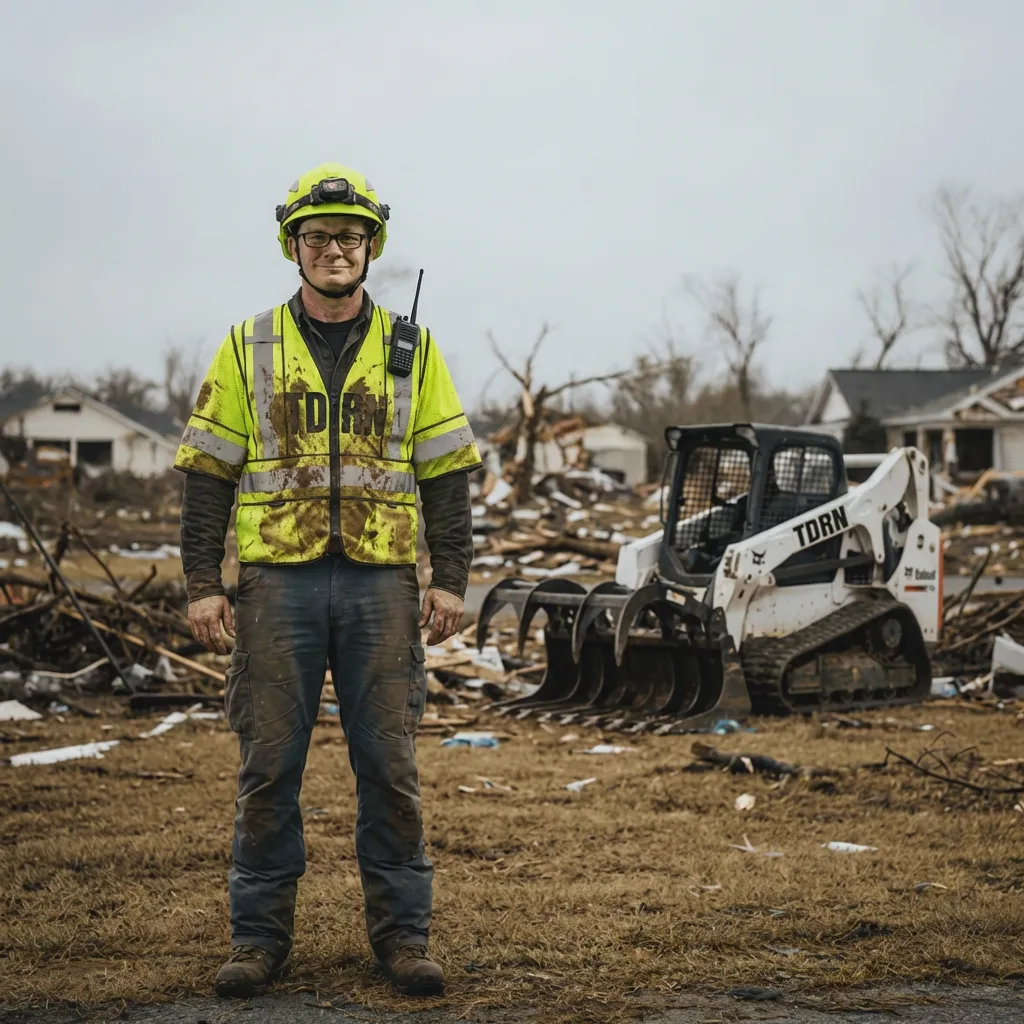
Real-world experience from blue-collar job sites to military deployments and front-line rescue work.
Founder Story
Jason “Old Country” Perry
Jason isn’t a theorist. He’s a blue-collar builder, veteran, and rescue volunteer with over 30 years in construction, heavy equipment, and hands-on field work.
He’s worked in the kinds of environments where coordination, safety, and getting the job done right actually matter.
Through real-world disaster situations, he saw the same problem again and again, good people showing up ready to help, but no structure to guide them, and responders stretched thin.
TDRN is the system he wished existed the first time he stepped into that kind of chaos.
Built with advisory input from military, SAR, fire, and aviation professionals.
Refined across multiple real-world responses—not in a conference room.
Designed to plug into existing ICS, not fight against it.
What TDRN Is
A Field-Built System to Multiply Your Response Capacity
TDRN is not another app or dashboard. It is a practical operating system that turns responders and scattered volunteers into a coordinated, accountable network.
Decision Support
Recon teams, standardized placards, and simple reporting tools feed leaders accurate field intel so they can prioritize with confidence.
Access Enabler
A clear placard and access-clearing system turns blocked roads and unknown hazards into mapped, prioritized routes for responders and supply chains.
Force Multiplier
TDRN plugs volunteers, contractors, and community assets into a disciplined framework—so every willing hand actually moves the mission forward.
How It Works
A Clear Flow from Recon to Support
TDRN turns a chaotic map into an actionable sequence: see the ground truth, mark it, clear it, then send the right help.
Recon Teams
Small, trained teams move first—mapping damage, hazards, and needs using a simple, repeatable method.
Placard System
Standardized placards communicate status, needs, and access level at a glance—for agencies, crews, and residents.
Access Clearing
Contractors and skilled operators are deployed with intention—clearing choke points and critical routes in priority order.
Support Teams
Medical, welfare, logistics, and community support follow a clear map—reducing overlap and closing real gaps in care.
One-Day Training
In One Day, Your Team Learns to Operate the TDRN System
A focused, one-day intensive that aligns leaders, trains operators, and prepares your community to plug into real-world disaster response.
Morning: Leadership & ICS Alignment
Command staff, agency leads, and key decision-makers learn how TDRN integrates cleanly with ICS and existing protocols.
- Roles & responsibilities in the TDRN model
- How TDRN reports feed command decisions
- Coordination between agencies & private sector
Midday: Skilled Operators & Safety Protocols
Contractors, heavy equipment operators, and field leaders are trained to work inside TDRN’s structured recon and access framework.
- Placard usage and field documentation
- Safety checks and comms discipline
- How to prioritize and clear routes
Evening: Community Preparedness
Public-facing session for community leaders, churches, businesses, and volunteers to understand how to plug in safely and effectively.
- What to expect in the first 72 hours
- How volunteers integrate into TDRN operations
- Practical steps to prepare before a disaster
Who This Is For
If You Touch Disaster Response, TDRN Is Built for You
TDRN is intentionally designed to bridge public agencies, private sector capability, and everyday community members.
Government & Agencies
Emergency management, fire, law enforcement, public works, and EOCs that need better intel and cleaner coordination with private assets.
Contractors & Skilled Workers
Heavy equipment operators, tree crews, utility contractors, and trades who want to serve legally, safely, and effectively in disasters.
Public & Community Leaders
Churches, nonprofits, neighborhood leaders, and volunteers who want to help without becoming part of the problem.
Why It Matters
Every Hour You Shave Off Chaos Saves Lives
TDRN compresses the time between impact and organized response—turning confusion into coordinated action when it counts most.
- Faster response: clear intel and routes mean crews hit the right places sooner.
- Less chaos: agencies, contractors, and volunteers operate from the same playbook.
- Saved lives: high-risk locations are identified and prioritized instead of discovered by accident.
- Stronger communities: residents see organized, visible effort instead of confusion and rumor.
The difference between a barely-coping response and a resilient community is not more gear—it is a system that lets people use what they already have, together.
Built in the Field, Not in a Boardroom
Credibility You Can Trust in the Worst Days
TDRN draws on thousands of hours of cumulative experience from professionals who live disaster work every year.
Founder Experience
Jason “Old Country” Perry brings a blended background of construction, military, and hands-on rescue deployments into the DNA of TDRN.
Advisory Network
Input and refinement from military officers, search & rescue team leaders, firefighters, and aviation professionals who stress-tested the model.
Real-World Basis
The TDRN framework has been shaped in actual flood zones, hurricane impact areas, and multi-agency responses—not on whiteboards alone.
Take the Next Step
Bring TDRN to Your Team or Community
Tell us who you are and what you are responsible for. We will follow up with dates, options, and a realistic path to deploy TDRN where you serve.
No spam. No pressure. Just a direct conversation about what it would take to make your next disaster less chaotic and more survivable.
Thrive Disaster Response Network
A real-world disaster response system built by operators, for the people who carry the weight when everything breaks.
© 2026 Thrive Disaster Response Network. All rights reserved.
Jason Perry
931-808-7714
TDRN aligns with ICS and respects existing chains of command while multiplying local capacity.